
Universal wheels, also known as swivel casters, are among the most widely used mobility components in industrial and commercial settings. Designed to rotate 360 degrees on a vertical axis, these casters allow equipment to move in any direction with minimal effort. From office furniture and medical carts to heavy-duty material handling trolleys and automated guided vehicles, universal wheels play an indispensable role in modern logistics and manufacturing. Understanding the different types, materials, load ratings, and proper usage methods is essential for selecting the right caster for your application and maximizing its service life.
What Are Universal Wheels?
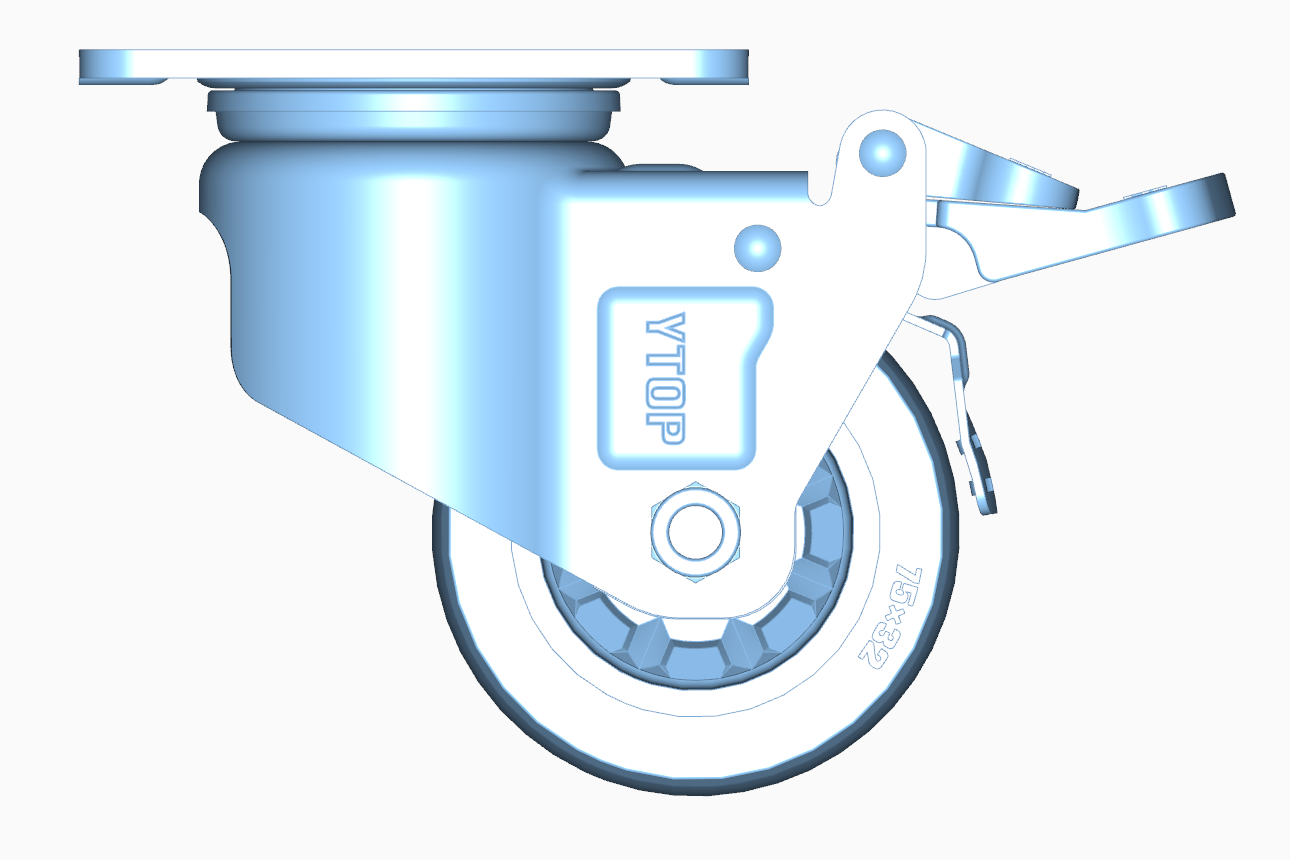
A universal wheel is a type of caster equipped with a swivel bearing assembly that enables the wheel to rotate freely around a vertical kingpin. Unlike rigid casters that only travel in a fixed straight line, universal wheels can pivot and change direction smoothly, making them ideal for maneuvering carts, trolleys, workstations, and equipment in confined spaces. The swivel action is typically achieved through a double-ball raceway or a tapered thrust bearing, both engineered to handle significant radial and axial loads while maintaining smooth rotational freedom even under heavy weight.
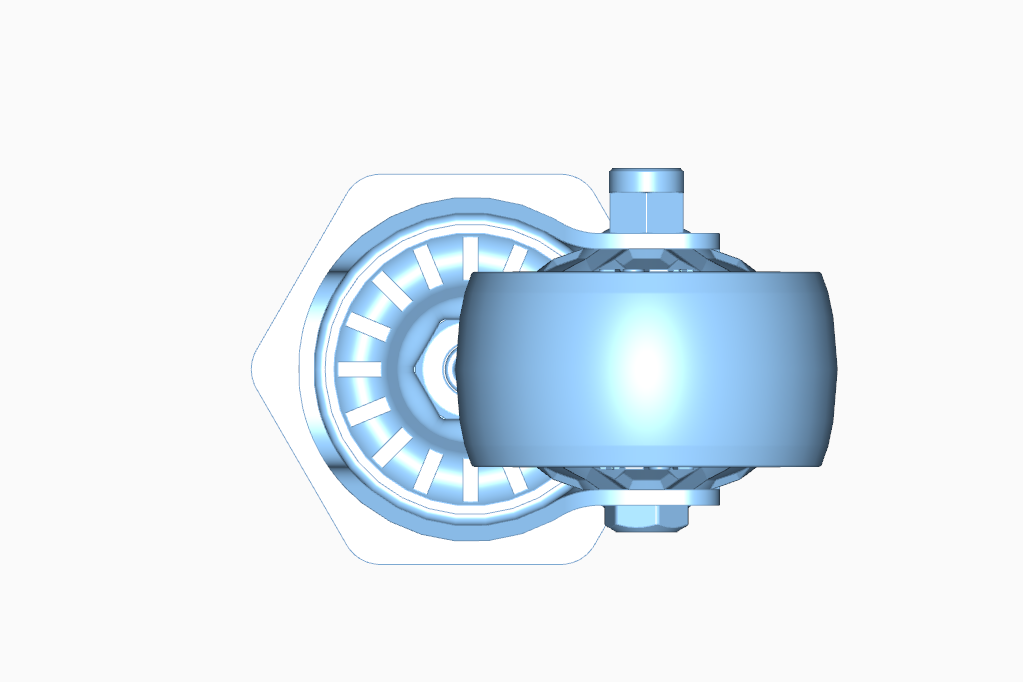
In practical applications, universal wheels are commonly paired with rigid casters to create a controlled steering system. For example, a four-wheel cart may use two universal wheels at the leading end and two rigid casters at the trailing end, allowing the operator to steer using the front wheels while the rear wheels maintain straight tracking. This configuration strikes an optimal balance between maneuverability and directional stability. Alternatively, all four wheels can be universal swivel casters, which offers maximum flexibility but requires operator skill to prevent wandering. Adding a total-lock brake mechanism to the universal wheel locks both the swivel rotation and the wheel rotation, converting it into a rigid position for precise positioning.
Common Types of Universal Wheels
Plate-Mounted Universal Casters
Plate-mounted universal casters feature a flat steel top plate with four bolt holes for secure attachment to equipment. This mounting style distributes the load across a larger surface area, making it the preferred choice for heavy-duty applications such as industrial carts, material handling racks, platform trucks, and assembly line equipment. Plate-mounted universal casters are available in load capacities ranging from 80 kg to over 1,500 kg per wheel, depending on the frame construction, wheel diameter, and bearing type. The mounting plate thickness typically ranges from 4 mm for light duty to 10 mm or more for heavy-duty applications.
Stem-Mounted Universal Casters
Stem-mounted universal casters use a threaded stem, grip neck, or expanding stem to attach to equipment. This mounting style is commonly found on furniture, medical carts, retail display racks, and light-duty appliances. The threaded stem allows easy height adjustment and installation, while grip neck stems provide a press-fit connection for quick assembly. Stem sizes typically range from M8 to M16 for light and medium duty applications. Grip ring stems are also available for tool-in-tool applications where quick removal is needed.
Bolt-On and Hollow-Tube Universal Casters
Bolt-on universal casters use a single bolt or stud to secure the caster to the equipment. This compact mounting option is ideal for tight spaces where a mounting plate would not fit. Bolt-on casters are commonly used on toolboxes, mobile workbenches, and light industrial equipment where load requirements are moderate. Hollow-tube stem casters are another variation used on tubular furniture frames and display racks.
Wheel Materials for Universal Casters
Polyurethane (PU) Universal Wheels
Polyurethane is the most popular material for universal caster wheels due to its excellent balance of load capacity, floor protection, and noise reduction. PU wheels offer load capacities up to 1,500 kg per wheel depending on diameter, resist most industrial chemicals and oils, and roll quietly on smooth floors. They are widely used in industrial environments, hospitals, laboratories, and food processing facilities where floor care and noise control are important considerations. Polyurethane is typically bonded to a cast iron or nylon core for structural strength.
Nylon Universal Wheels
Nylon (polyamide 6 or 6/6) wheels are known for their exceptional strength and resistance to impact, water, and corrosive chemicals. They operate well in high-temperature environments up to 80 C continuously and are commonly used in wet areas, automotive plants, bakeries, and outdoor applications. Nylon wheels have a relatively low coefficient of rolling resistance and are dimensionally stable under heavy loads. The main drawbacks are noise during rolling and a tendency to mark sensitive flooring surfaces such as epoxy or vinyl.
Rubber and Thermoplastic Rubber Universal Wheels
Rubber wheels provide excellent floor protection and shock absorption, making them suitable for uneven surfaces, outdoor use, and applications requiring quiet operation. However, they have lower load capacities and higher rolling resistance compared to PU or nylon wheels. Thermoplastic rubber (TPR) offers improved durability over natural rubber while maintaining good floor protection properties. Rubber universal wheels are commonly used on hand carts, garden equipment, maintenance trolleys, and retail displays.
How to Use Universal Wheels Correctly
Proper Load Distribution
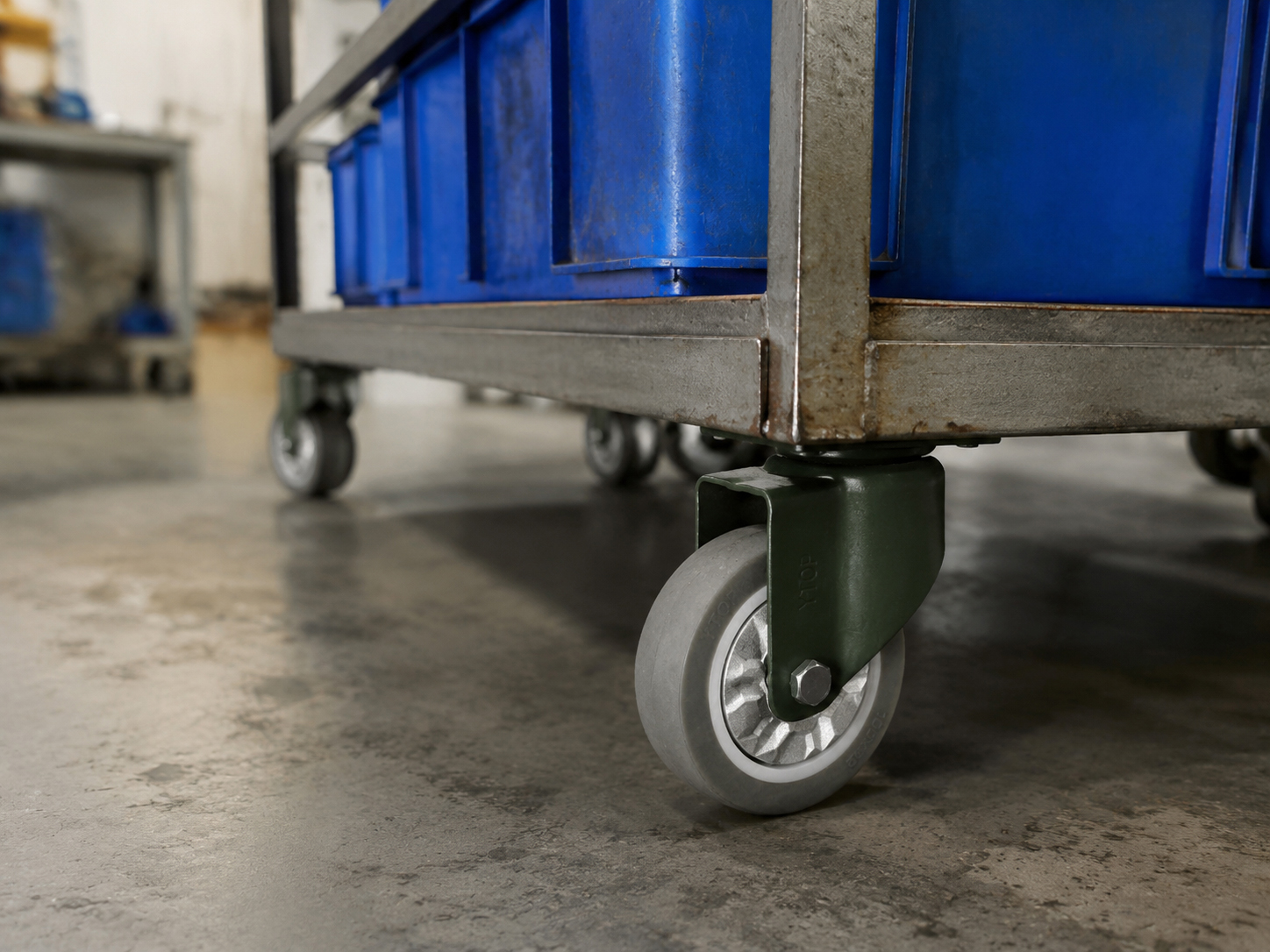
One of the most common mistakes in using universal wheels is overloading or unevenly loading the equipment. Each caster has a rated load capacity based on its wheel diameter, tread material, and bearing type. When four casters are used on a piece of equipment, the total distributed load should not exceed 75% of the combined rated capacity to account for uneven floor surfaces, dynamic shock loads during movement, and potential single-wheel contact over gaps or thresholds. Always place the heaviest load low and centered within the equipment footprint to prevent tipping and reduce lateral strain on the swivel bearings. For tall or top-heavy loads, consider adding anti-tip casters or outriggers.
Installation Guidelines
Proper installation is critical for universal wheel performance and service life. When mounting plate casters, ensure the mounting surface is flat, rigid, and free of weld splatter or debris. Use bolts of appropriate grade (typically grade 8.8 or higher) and torque them evenly in a star pattern to avoid warping the mounting plate. For stem-mounted casters, verify that the stem diameter and length match the mounting socket and that the caster sits flush against the mounting surface. After installation, check that all wheels rotate freely in their axles and that each swivel head turns without binding or stiffness. Misaligned mounting can cause premature bearing failure, uneven wheel wear, and unpredictable steering behavior.
Maintenance Best Practices
Regular maintenance extends the service life of universal wheels significantly. Clean the wheels and fork assembly regularly to remove debris, hair, fibers, and dirt that can accumulate around the axle and swivel raceway. Lubricate the swivel raceway and axle bearings according to the manufacturer recommendations, typically every six months for light use or monthly for continuous heavy industrial applications. Use a high-quality lithium-based grease suitable for the operating environment. Inspect wheel treads for signs of flat spots, cracks, chunking, or uneven wear, and replace damaged wheels promptly. Keep floor surfaces clean and free of debris, oil, and water to reduce rolling resistance, prevent skidding, and protect wheel material integrity.
Troubleshooting Common Universal Wheel Problems
If a universal wheel becomes difficult to swivel or makes grinding or clicking noises, the likely causes are worn swivel bearings, lack of lubrication, or debris trapped in the ball raceway. Disassemble the swivel head, clean all components with solvent, inspect balls and raceways for pitting or brinelling, and re-grease before reassembly. Wheels that cause the equipment to drift or pull to one side may indicate uneven floor loading, mismatched wheel diameters, a bent fork, or a worn kingpin. Casters that develop flat spots on the wheel tread are typically overloaded, subjected to prolonged stationary loading, or operating at excessive speeds; rotating the equipment periodically, using a higher-grade wheel material, or reducing the load per wheel can help prevent this issue.
Frequently Asked Questions
Q: What is the difference between a universal wheel and a rigid caster?
A: A universal (swivel) wheel can rotate 360 degrees around a vertical axis, allowing the equipment to change direction freely in any direction. A rigid caster only moves in a straight line and cannot pivot. Most material handling carts use a combination: universal wheels for steering at one end and rigid casters for stability at the other end.
Q: How do I choose the right load capacity for universal wheels?
A: Calculate the total weight of the fully loaded equipment, divide by the number of casters, and apply a safety factor of at least 1.5. For dynamic applications, uneven floors, or outdoor use, increase the safety factor to 2.0 or higher. Always select a caster with a rated capacity above your calculated per-wheel load to ensure long service life.
Q: Can universal wheels be used outdoors?
A: Yes, but choose wheels and forks rated for outdoor use. Rubber or polyurethane treads on aluminum or cast iron centers work well outdoors. Avoid standard nylon wheels in prolonged sunlight as UV exposure can cause brittleness and surface cracking. Stainless steel or zinc-plated forks are recommended for outdoor or washdown environments to prevent rust and corrosion.
Q: How long do universal wheels typically last?
A: With proper loading, professional installation, and routine maintenance, quality universal wheels can last 3 to 8 years in light to medium industrial service. Heavy-duty applications with continuous high-speed rolling may require replacement every 1 to 3 years. Regular inspection and timely lubrication are the best ways to maximize service life and avoid unexpected failures.
Related Reading
What Are the Common Load-Bearing Standards for Universal Wheels?
How to Calculate Industrial Caster Load Capacity: Dynamic vs Static Load
How to Properly Use Industrial Casters to Extend Service Life
What Core Parameters Need Attention in Industrial Caster Selection?
How Are Industrial Caster Loads Graded? Light, Medium, Heavy, Extra-Heavy Division
Browse Medium Duty Caster Series (100-190kg)
Explore Heavy Duty Caster Series (150-610kg)
Contact YTOP Caster Experts for Custom Solutions
Post time: May-21-2023