
Understanding wear resistant caster materials is essential for minimizing maintenance costs and maximizing equipment uptime. Caster wheel wear directly impacts rolling performance, floor protection, and total cost of ownership. Different materials exhibit dramatically different wear characteristics depending on floor conditions, load weight, speed, and environmental factors. This comprehensive analysis compares the wear resistance of major caster wheel materials, helping you select the optimal wheel compound for your specific application.
What Makes a Caster Material Wear-Resistant?
Factors Affecting Caster Wear
Caster wheel wear is influenced by multiple factors: the hardness and friction coefficient of the wheel material, the floor surface texture, load weight per wheel, rolling speed, environmental contaminants (oil, water, debris), and the presence of abrasive particles. Abrasive wear occurs when hard particles between the wheel and floor grind away material. Adhesive wear happens when material transfers between the wheel and floor due to friction.
Measuring Wear Resistance
Wear resistance is commonly measured using the Taber Abraser test (CS-17 wheel, 1000g load) or DIN abrasion test, which measures volume loss per 1000 cycles. Lower volume loss indicates better wear resistance. Real-world wear rate depends on both the material properties and the operating environment.
Wear Resistance of Common Caster Materials
Polyurethane (PU)
Polyurethane offers the best overall wear resistance among common caster materials. PU demonstrates 3-5 times the abrasion resistance of rubber and significantly outperforms nylon and phenolic resins. The material’s inherent toughness and tear resistance prevent chunking and grooving. High-performance PU formulations used in heavy-duty casters can extend wheel life to 5-8 years under industrial conditions.
Nylon (PA6, PA66)
Nylon wheels are harder and more rigid than polyurethane, with good wear resistance on smooth floors. However, nylon tends to wear rapidly on rough or contaminated surfaces due to its relatively low impact toughness. Nylon is also prone to moisture absorption, which can alter dimensional stability over time.
Rubber (BR, SBR, Natural)
Rubber offers moderate wear resistance, superior cushioning, and excellent floor grip. However, rubber wheels wear faster than polyurethane under heavy loads and on abrasive surfaces. Rubber is best suited for light to medium duty applications where noise reduction and floor protection are prioritized over maximum wear life.

Phenolic Resin
Phenolic resin wheels offer excellent wear resistance on smooth floors and high load capacity. However, they are brittle and can crack or chip on rough surfaces or when subjected to impact loads. Phenolic wheels are best suited for smooth, clean warehouse floors.
Floor Conditions and Wear
Concrete Floors
Concrete is the most common industrial floor surface. Smooth, sealed concrete causes moderate wear. unsealed concrete with exposed aggregate is highly abrasive, rapidly wearing down rubber and nylon wheels. Polyurethane performs best on both sealed and unsealed concrete surfaces.
Epoxy and Polished Floors
Smooth epoxy and polished concrete floors are gentler on caster wheels but can cause slip issues with hard materials. Soft polyurethane and rubber wheels provide better traction on smooth surfaces while causing minimal wear.
Outdoor and Rough Terrain
Outdoor surfaces with gravel, cracks, and debris accelerate wheel wear significantly. For outdoor use, thicker polyurethane treads or solid rubber wheels are recommended. Iron core polyurethane wheels with thick tread layers offer the best combination of load capacity and wear resistance.
Extending Caster Wheel Life
Proper Load Distribution
Overloading is the leading cause of premature caster wear and failure. Ensure each wheel operates within its rated capacity. Proper load distribution across all casters prevents overload on individual wheels.
Regular Maintenance
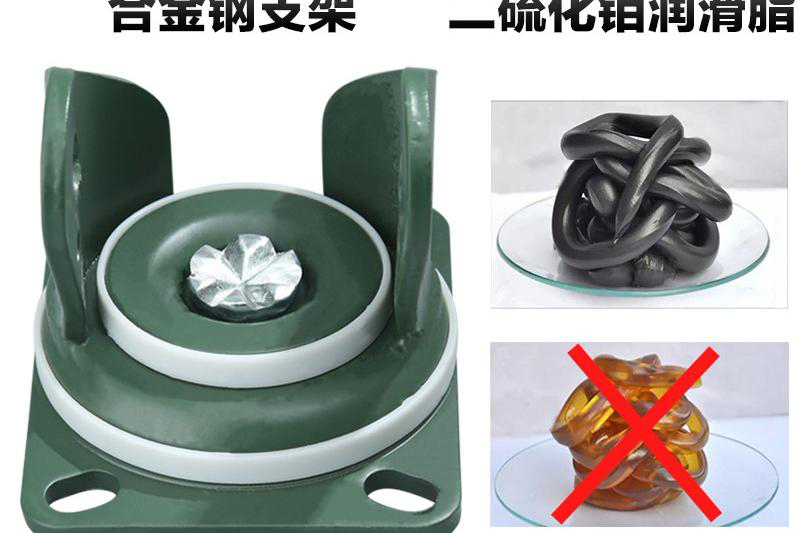
Keep swivel bearings lubricated, remove debris from wheel treads, and inspect for uneven wear. Early detection of wear patterns can prevent catastrophic failure and extend service life.
Wear Testing Standards and Methods
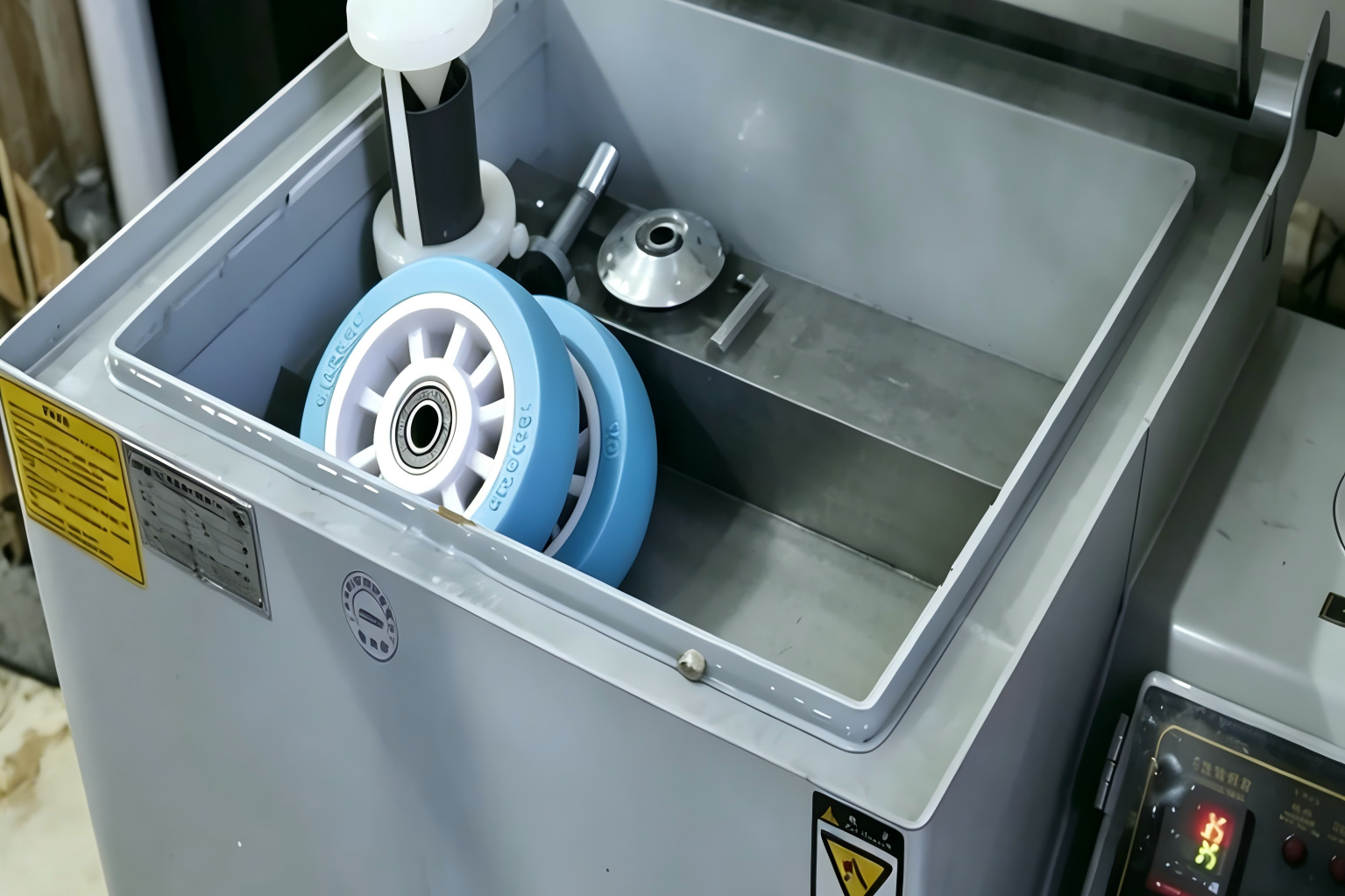
Taber Abrasion Test
The Taber Abraser test (ASTM D4060) is the industry standard for measuring caster wheel material wear. A wheel specimen is rotated under a specified load against abrasive wheels, and the volume loss per 1000 cycles is measured. Lower volume loss indicates better wear resistance. Polyurethane typically shows 50-100 mg loss per 1000 cycles, while rubber shows 200-400 mg and nylon 150-250 mg under the same test conditions.
DIN Abrasion Test
The DIN 53516 test method measures abrasion resistance by rolling a test specimen against an abrasive surface. This test is more commonly used for rubber and elastomer materials. Results are reported in mm3 volume loss. Comparing Taber and DIN results requires understanding the different test parameters and materials.
Real-World Wear Factors
Laboratory test results don’t always predict real-world performance. Floor texture, debris type, load distribution, rolling speed, and environmental contaminants all affect actual wear rates. For accurate predictions, run a pilot test with sample wheels in your actual operating environment.
Material Wear Resistance Rankings
Polyurethane (PU)
Polyurethane ranks highest in wear resistance among common caster materials. Different PU formulations offer varying performance: polyester-based PU offers better chemical resistance, while polyether-based PU provides better hydrolysis resistance. High-performance PU can last 3-5 times longer than rubber on the same application.
Nylon and Polycarbonate
Nylon (PA6, PA66) offers moderate wear resistance on smooth surfaces but wears rapidly on rough or debris-covered floors. The material’s hardness makes it susceptible to chipping and cracking on impact. Polycarbonate blends offer improved impact resistance but similar wear characteristics.
Rubber (Natural, SBR, BR)
Rubber provides moderate wear resistance and excellent floor grip. The softer material wears faster under heavy loads but absorbs impacts better. Rubber is best suited for light to medium duty applications where noise reduction is important.
Extending Caster Wheel Life
Proper Load Management
Overloading is the single biggest cause of premature caster wear. Always ensure each wheel operates within its rated capacity. Distribute loads evenly across all casters. A 20% overload can reduce wheel life by 50% or more.
Floor Maintenance
Keep floors clean and free of debris. Metal shavings, broken glass, and abrasive particles accelerate wheel wear exponentially. Regular sweeping and floor maintenance dramatically extend caster service life.
Wheel Rotation
In multi-caster configurations, uneven wear patterns can be corrected by rotating wheels periodically. This is particularly beneficial for 4-wheel carts where front and rear wheels experience different wear patterns.
Environmental Impact on Wear
Temperature Effects
Extreme temperatures accelerate caster wheel wear. In high-temperature environments (over 60C), rubber and PU soften, increasing friction and wear. In freezing temperatures, materials become brittle, leading to cracking and chunking. Select materials rated for your operating temperature range.
Chemical Exposure
Oils, solvents, and cleaning chemicals degrade wheel materials at different rates. Rubber swells and softens when exposed to mineral oils. PU resists oils but may hydrolyze in high-humidity environments. Nylon absorbs moisture, affecting dimensional stability. Always consider the chemical environment when selecting wear-resistant caster materials.
Cost vs Wear Life Trade-offs
Material Price vs Service Life
The most wear-resistant materials (polyurethane) also cost more upfront. Calculate the cost per year of service: divide the wheel price by the expected service life in years. Polyurethane wheels may cost twice as much but last 3-5 times longer, resulting in lower annual cost.
Replacement Labor Costs
Beyond wheel cost, consider the labor required to replace worn casters. In downtime-heavy industries, the cost of stopping production to change wheels often exceeds the cost of the wheels themselves. More durable wheels reduce replacement frequency and associated labor costs.
Conclusion
Selecting the right wear-resistant caster material requires balancing laboratory test data, real-world application conditions, and total cost of ownership. Polyurethane offers the best overall wear resistance for most industrial applications. Match the material to your specific floor conditions, load requirements, and environmental factors for optimal results.
When in doubt, consult with a caster material specialist who can recommend the optimal material grade based on your specific operating conditions and budget constraints.
This professional guidance ensures you get maximum wear life from your caster investment.
Choose wisely, maintain regularly, and enjoy long-lasting performance.
That is all.
Frequently Asked Questions
What is the most wear-resistant caster wheel material?
Polyurethane is the most wear-resistant caster wheel material, offering 3-5 times the abrasion resistance of rubber. Iron core polyurethane wheels provide the ultimate combination of wear resistance and load capacity.
How can I slow down caster wheel wear?
Keep loads within rated capacity, maintain clean floor surfaces, lubricate swivel bearings regularly, and choose the right wheel material for your floor type. Proper caster configuration (2 swivel + 2 rigid) also reduces side-loading wear.
When should I replace worn caster wheels?
Replace wheels when tread depth is reduced by 50%, when cracks or flat spots appear, or when rolling resistance increases significantly. Worn wheels can damage floors and create safety hazards.
Related Reading
- 📚 Rubber Casters vs Polyurethane Casters — Compare wear properties of rubber and PU materials.
- 📚 Iron Core Polyurethane Casters — Heavy-duty wear-resistant caster solution.
- 📚 Common Caster Materials Guide — Comprehensive material comparison for caster selection.
- 📚 How to Choose Casters: Selection Guide — Expert caster selection based on wear requirements.
- 📚 BR Rubber vs TPR Casters — Compare rubber material variants for wear performance.
Explore our super heavy-duty casters (700-1600kg) and heavy-duty casters (150-610kg) with premium wear-resistant polyurethane treads, or contact our engineering team for material selection based on your floor conditions.
Post time: Nov-18-2024